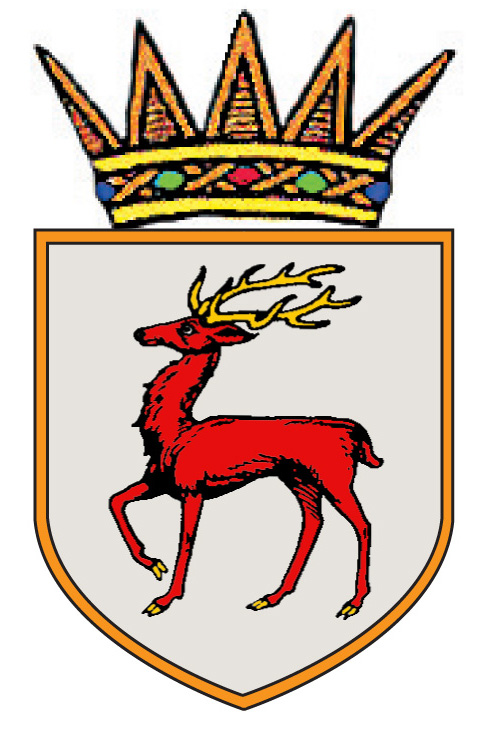
General History
Rather than write a new account of Munster/Desmond, for the purposes of the Association’s webpage, the following is perfectly appropriate. It is taken from the booklet ‘MacCarthy People and Places’ written by the Cork historian Alicia St Leger (Ballinakella Press, County Clare, 1990). It is still in print by-the-way, and worth having as it contains much information, summary of some MacCarthy castles, bios of important MacCarthy people. Below is from pages 4 to 7, with some minor editing for shortness:
Extract from ‘MacCarthy People and Places’
“The MacCarthy family trace their roots to Olill Olum, who was King of Munster at the end of the second century A.D. His eldest son was Eoghan Mor, whose descendants included the MacCarthys, O Sullivans, O Keefes, and O Mahonys. These clans held power in the Munster area known as the Eoghanacht because of their descent from Eoghan Mor.
From the fourth century Cashel in Co. Tipperary became the chief residence of the kings of Munster. A church was erected there in the fifth century by Aongus, the first Christian King of Munster. Over 600 years later King Cormac built an impressive chapel there which was completed in 1134. Until the tenth century, Eoghanacht power was virtually unchallenged in the southern part of Ireland, but this position of strength was increasingly threatened by the growing power of other clans, particularly the Dal Cais from the west (notably Brian Boru) and the O Neills from the north.
At about this time the MacCarthy name began to be used. The family is named after Carthach (meaning ‘the loving one’), King of Munster (died 1045). His son Muiredach assumed the name MacCarthach meaning ‘the son of Carthach.’
Between about 970 and 1170 the MacCarthys tried to maintain their power against encroachments, most notably by the O Briens. In the early twelfth century a settlement was reached which gave the MacCarthys control over south Munster, known as Desmond, while the O Briens received north Munster [Thomond]. These struggles among various groups were given a new dimension by the arrival of the Normans in 1169 (invited by an Irish king of Leinster). Diarmaid MacCarthy, King of Desmond, submitted to Henry II of England in 1171, probably hoping that Henry would protect his territory rom aggression. He regarded Henry’s authority over Desmond lands as only nominal. Henry however considered himself feudal overlord of the MacCarthy lands and drove Diarmain out of his eastern territory, dividing it between his appointees deCogan and Fitzstephen. The MacCarthys were pushed to the west and south. Internal rivalry amongst the MacCarthys weakened their power and aided foreign advancement. This was halted by the successful warfare of Fineen MacCarthy, who in 1261 defeated the invaders at Callan, near Kenmare in Co. Kerry. Following this victory, the MacCarthys retained control and power in Desmond until the seventeenth century.
The MacCarthys were divided into four main groups from the thirteenth century onwards:
- the main MacCarthy line was that of the MacCarthy Mor. The MacCarthy Mor lands extended over Kerry and parts of West Cork, with the principal seat being at Muckross near Killarney. In the mid-sixteenth century the MacCarthy Mor, Domhnall, was generally loyal to the English and sided with them in the rebellion by the Fitzgerald Earl of Desmond. Domhnall was created Earl of Clancare in 1565 (accepted as a political gesture by him, for he never really relinquished being King of Desmonde). Domhnall (Donal) died in 1596. He left no legitimate male heir, so his land was divided between the Crown, his natural son, and his daughter Ellen. She inherited most of the land in Kerry and married Florence MacCarthy Reagh, cousin and rival of the chief of that branch of the MacCarthys. Though this land was confiscated by Cromwell, some was restored in 1663 but the Muckross estate eventually passed to the Herbert family (late eighteenth century).
- The MacCarthys of Muskerry were powerful and amassed extensive lands in mid-west Cork from the fourteenth century onwards. One of the most notable lords was Cormac Laidir (‘the strong’) who ruled 1455-1495. He extended his lands eastwards and built several important castles and churches, including Blarney Castle which became the clan’s chief residence. Cormac MacDermod, lord of Muskerry in the late 16th century fought on the side of the English at the Battle of Kinsale in 1601, later rebelled, but was pardoned in 1603. His son was created Viscount Muskerry and Baron Blarney; his grandson, Donough, fought against Cromwell in the 1650’s, losing all. He was created Earl of Clancarty by the exiled Charles II of England and on the Restoration recovered his estates. However, his title and the bulk of the Muskerry lands were again lost at the end of the seventeenth century, for rebellion during the Williamite wars.
- The MacCarthy Reagh branch held power in the Carbery area of south Cork from the thirteenth century, also descending from the main line. The name Reagh means ‘swarthy’. The MacCarthys Reagh extended their territory in the fifteenth century and acquired Kilbrittan Castle – which became their chief residence. They lost of their lands through confiscation after the Cromwellian wars of the mid-seventeenth century.
- The MacCarthys of Duhallow, in northwest Cork, obtained power in the thirteenth century and were based at Kanturk. This branch was known as MacDonogh MacCarthys, as descended from Diarmaid, a younger son of Cormac Fionn (Prince of Desmond 1244-1247).
Note: this branch lost its lands during the Cromwellian wars, but recovered them and held on until the Williamite wars.
Thus by the end of the seventeenth century the MacCarthys had lost their pre-eminent position in south Munster and virtually all of their lands and castles had been confiscated.”
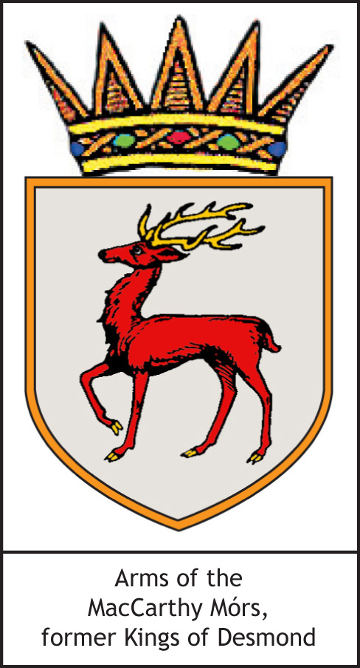
Additional Information
With the above as general background, the following pages on this website of the Association will attempt to fill in much of the detail of the happenings during the centuries of MacCarthy rule in Desmond. It must be said that scholars and other references such as those of the Four Masters and British government papers have often not agreed. As to dates, successions, etc. We have studied all the various writings and publications and have attempted to reconcile in the most reasonable way. Therefore the dates/names which follow represent the Association’s conclusions at the present time. New information and suggested corrections will be welcomed.
Most of the following works have proved useful, and will help those who wish to dig deeper into the subject of the Kingdom of Desmond and its territories, Irish titles and descents, etc. They contain additional detailed bibliographies and references for further research.
- Butler, William F.T., Confiscation in Irish History (Dublin 1917)
- Butler, William F., ‘The Cromwellian Confiscation in Muskerry’, Journal of the Cork Historical & Archaeological Society XXII (1917), 25-60
- Butler, William F.T., Gleanings from Irish History (London 1925)
- Butler, William F., ‘The Pedigree and Succession of the House of Mac Carthy Mor, With Map’, Journal of the Royal Society of Antiquaries of Ireland (1921), 32-50
- Dorney, John J., ‘An Irishman in Exile – Florence MacCarthy in London 1601-1640’ (2012); ‘The MacCarthys and the Nine Years War in Munster 1595-1603’ (2011); ‘The Munster Plantation and the MacCarthys 1583-1597’ (2011); ‘Ellen MacCarthy – The Survivor’ (2011); ‘Florence MacCarthy, the last MacCarthy Mor’ (2010); ‘The Desmond Rebellions’ (2015). All published in THE IRISH STORY and accessible on the internet at http://www.theirishstory.com/.
- Doyle Clan Association, ‘Irish Chiefs of the Name, and the SCICC’, on the Doyle website at http://www.doyle.com.au/chiefs.html. Discusses the correct and legal method of Brehon Law successions, who is responsible and who is not. Includes a list of all recognised chiefs-of-name and a commentary about the current posture of the Standing Council of Irish Chiefs and Chieftains. Placed in 2012. Also placed on the MacCarthy Clan Foundation website in 2013, at http://www.mccarthyclan.org/
- Duhallow, the Lord of, Gaelic Titles and Forms of Address: a Guide in the English Language (Kansas City, Mo, 2nd Edition, 1997); and ‘Towards a Classification of Current Nobiliary Titles in Use in Ireland’, in The Augustan Omnibus, Torrance, California, book 12 (1993), 130-35
- Ellis, Peter Berresford, Erin’s Blood Royal: The Gaelic Noble Dynasties of Ireland (New York, 2nd Edition, 2002)
- Gillman, Herbert Webb, ‘The Chieftains of Pobul-J-Callaghan, Co.Cork’, Journal of the Cork Historical & Archaeological Society III, Second Series, No. 30 (1897), 202-220. Contains much on the overall Kingdom of Desmond history
- Healy, James N., The Castles of County Cork (Cork 1988)
- Keane, Lieutenant Colonel Leonard M., Jr., USAR (retired), The O Cahan, ‘Practical Application of Gaelic Irish Tanistic Succession’, at Clan McCarthy U.S. website now inactive (see O Cahan article at new MacCarthy Clan Foundation website, http://www.mccarthyclan.org/
- Keane, Leonard M., Jr., The O Cahan, ‘Irish Chiefly Succession in the 21st Century’, 2014, at MacCarthy Clan Foundation website and on the website of the Doyle Clan. This is a most significant contribution to the confusing issue of Irish chiefly successions, often very political as well and certainly very mismanaged by the Office of Chief Herald and by the so-called experts over the centuries. Points out the correct procedures, and how an ‘ad hoc derbhfine’ can be instituted so as to overcome the tragedy of leaderless clans, as the Scots have done in conform- mity with basic Brehon Law. Reprinted on the website of the Clan MacCarthy North America
- Keating, Rev. Geoffrey, The History of Ireland (Kansas City, MO, USA reproduction, 1983, volume 3)
- Kingdom of Desmond Association, ‘No Irish Need Apply! Still the Same?’. Deals with the initiative of the Association to the U.K. House of Windsor regarding social recognition of Gaelic royal houses and nobility. And gives the response which was received by the Association in 2012. Published on the website of Clan Doyle, with extensive illustrations, April 2013, at http://www.doyle.com.au/noirish.html and also published May 2013 on the Clan MacCarthy Foundation website, which can be accessed at http://www.mccarthyclan.org/
- Kingdom of Desmond Association, in cooperation with The Clan MacCarthy Foundation, ‘Irish Chiefly Succession: ‘Ad Hoc Derbhfine’ Guidelines’. Provides information concerning the Scottish practice as may be modified for Ireland, by clans which have lost their Chief-of-Name to history and wish to reinstitute the Gaelic system. Published at http://www.mccarthyclan.org/, September 2014. Reprinted October 2014 on the websites of Clan Doyle, the MacCarthy Clan of North America, and that of Clan O Crowley. Also reprinted Spring 2015 in THE AWEN – Journal of the Noble Society of Celts
- Lathrop, Captain the Chevalier Mitchell L. USNR (retired), ‘History of Brehon Law’, published by the Association, 2013 – see the Gaelic Titles page of this website. A fresh look at Irish legal development. Also published in the Winter/Spring 2013 issue of THE AWEN – Journal of the Noble Society of Celts, which can be viewed on the internet (google Noble Society of Celts for access)
- Marmion, Chevalier William F., ‘Nobiliary Titles in the Republic’, Irish Roots 3 (1995), 6-7
- Marmion, Chevalier William F., ‘Titles Granted by Terence McCarthy of Belfast While Imposting as The MacCarthy Mor, and the Aftermath’, within the larger article ‘Gaelic-Irish Titles of Nobility’, on the Doyle Family website at http://www.doyle.com.au/titlesgranted
- McCarthy, S.T. (MacCarthy Mor), The MacCarthys of Munster (Dundalk 1922)
- MacCarthy, Daniel (Glas) of Gleann-A-Chroim, The Life and Letters of Florence MacCarthy Reagh, Tanist of Carbery, MacCarthy Mor (London 1867)
- MacCarthy Mor, The, Historical Essays on the Kingdom of Munster (Kansas City, Mo 1994). (Note: this is a work of Terence McCarthy, written while he was accepted as MacCarthy Mor, and while valuable must be read with caution)
- MacCotter, Paul, ‘The Irish Clans of Desmond’, Irish Roots 4 (1998), 26-27
- Murchadha, Diarmuid, ‘The Carties Plaied the Divells in Desmond: The Battle of Callann, 1261’, Journal of the Cork Historical & Archaelogical Society, LXVI, No. 204: July-December, 1961. A very comprehensive study not only of the battle but also of the families of Desmond as well. Excellent bibliographical notes.
- Nash, Catherine, Of Irish Descent: Origin, Genealogy, and the Politics of Belonging (Syracuse, NY, 2008). [Note: very insightful book, with a strong understanding of nobiliary history. Also understands the MacCarthy Mor hoax correctly and is sympathetic to the innocent – quite unlike the various negativists)
- O Hart, John, Irish Pedigrees (Baltimore, MD, USA reproduction, 1976, 2 volumes)
- O Muirchadha, Diarmuid, Family Names of County Cork (Dun Laoghaire, County Dublin, 1985)
- O Sullivan, Patrick, From Cashel to Carbery: Gleanings from MacCarthy History (Kanturk, County Cork, 1992). [Note: this is a well-done booklet of the former MacCarthy Clan Society in Ireland.]
- St Leger, Alicia, MacCarthy People and Places (County Clare, 1990)
We will list new publications of a general ‘Kingdom of Desmond’ nature/interest either above or on our ‘news’ page.
Nobiliary Titles and Feudal Designations
For those interested in nobiliary titles including feudal designations, etc. which flowed from the British Crown in one of its personalities (England, Great Britain, United Kingdom), this subject is covered in a number of published works and on the internet. The Association makes no comment about British titles such as baron, earl, etc. relating to Ireland, as that is the province of the Irish Peers Association and British law. However, Irish people still holding such titles have every right to do so. The titles were created by a ‘previous state’ and in international law the successor state (the current Irish government) has no right to make any laws regarding the use of the titles bestowed by a previous state and thus the people holding them have every right of usage. The so-called ‘feudal titles’ using Irish place names are more problematical (as no definitive list exists) and we do say that they shouldn’t even continue to be described as ‘Irish Feudal Titles’ but rather as ‘British Feudal Titles Which Related to Ireland’.
British titles have nothing to do with the former Kingdom of Desmond and have no relationship in terms of any Gaelic Irish titles anywhere in Ireland. They have nothing to do with the history or grants or definitions used by the Irish nobility when the Gaelic system was operative in Ireland, or now. Gaelic titles were and are the property of the various Irish royal houses and their subordinates per documentation, historical usage and ‘chief rents’ paid, etc., Again, and for emphasis, Gaelic titles and usages/inheritances have no legal relationship to any laws ever passed by any British government or by any government in Ireland still ruled by a British government in one of its personalities. Those governments had no right to outlaw Gaelic titles/practices, or legislate about Irish structures, however much those governments tried to abolish by force and duress the Gaelic order of things including titles. Thus English-inspired laws abolishing Gaelic titles (or abolishing ‘feudalism’ 1660-1662) or any other law on any subject passed when England/Great Britain/UK were controlling Ireland have nothing to do with the Gaelic order of things, and are rejected as irrelevant.
Finally, those Irish structures and the Brehon Law relating to them are also not subject to any laws passed relating to them by any current Irish government, as that government is a ‘successor state’ and operates under the historic English common law which it accepted in lieu of historic Irish law. In effect, the Irish government of today has nothing legally to say either about historic Gaelic titles or about British titles emanating from the ‘previous’ de facto British government in Ireland.
Having said the above, it is certainly noted that there are people in Ireland and in what was Desmond who still legally bear titles emanating from a British government prior to Irish independence in 1922. And they and many of their ancestors have proved their total commitment to Irish nationalism and freedom. Many are ‘Irish’ in every manner including their birth and passports, and are publicly devoted to the idea of an Irish nation – which encompasses people of all backgrounds as citizens.